
Finding Moorestown Residents
Moorestown does not maintain one public roster of everyone who lives in town. The useful records are narrower. A tax or deed record can document an ownership connection. The state voter check can test one person’s registration status when the required details are known. A city directory or phone book can preserve an older name and address. Court, vital, business, and license systems each answer their own limited question. A strong Moorestown residents search starts by deciding whether the goal is a current parcel, a public affiliation, an older household, or a qualifying event.
Each result needs context. An owner is not always an occupant. A mailing address is not necessarily the mapped property location. A directory line can lag a move, and a blank portal search only shows that the selected query did not return a result. Keep the spelling used by the source, the date searched, and the record type. Those notes make it easier to check a second official source without merging people who merely share a name.
- For an address, confirm the parcel in the municipal map viewer and note its block and lot.
- Use the tax or county land-record route for the question at hand, then save the source date and search terms.
- Check the appropriate individual state portal or custodian when a name needs independent confirmation.
- For an older household, compare a dated directory or phone book with maps, deeds, newspapers, and local-history files.
- Send a focused OPRA request only when the record is identifiable and no online access channel supplies it.
Moorestown Resident Records Offices
Three offices form the main starting point for a Moorestown residents question. The Burlington County Clerk keeps recorded land instruments. The Moorestown Tax Assessor maintains the municipal tax list and block-and-lot map work. The Burlington County Superintendent of Elections maintains voter records and poll books under the state’s release rules. They do not hold interchangeable files. Use the office that owns the record, rather than asking one office to assemble a person history from unrelated systems.
Burlington Superintendent of Elections
301 Harper Drive
Moorestown, NJ
609-265-5111
For questions about a whole named street, the address-by-address method belongs on the Moorestown street directory route. That method keeps the parcel trail separate from a one-person verification question.
Moorestown Parcel Record Trail
Property research works best when it begins with the address rather than a guessed surname. The municipal GIS viewer accepts an address or place name and lets a user select a parcel. Its visible layers include census blocks, election districts, polling places, zoning, wetlands, fire resources, and trash zones. Carry the parcel’s block and lot to the tax map and then to the recorded-instrument index. The public static view did not expose a complete parcel-card field list, so a current owner, assessed value, or deed image should never be assumed from the map alone.
The County Clerk’s PRESS system supplies the formal land-record side of the route. It has instrument, document-type, block-and-lot, and name searches. The coverage changes with time: block/lot and owner-name searching applies on or after March 1, 2012; 1965 through February 2012 uses owner-name searching; earlier work goes to the county archive viewer. More than 1.7 million documents are described as immediately displayable, but some remain hard-copy. The different access eras matter when a Moorestown search appears empty.
- Parcel
- A defined piece of land represented by a block, lot, and sometimes a qualifier on the local tax map.
- Situs address
- The mapped property location. It may differ from an owner’s mailing line in a tax record.
- Index
- A finding tool that points to a record. An index hit is not a certified copy or a full document image.
- Grantor and grantee
- The parties named in a recorded conveyance. Their roles must be read from the actual instrument.
Burlington County’s public-record access page shows the county’s online and public-computer route for the index.
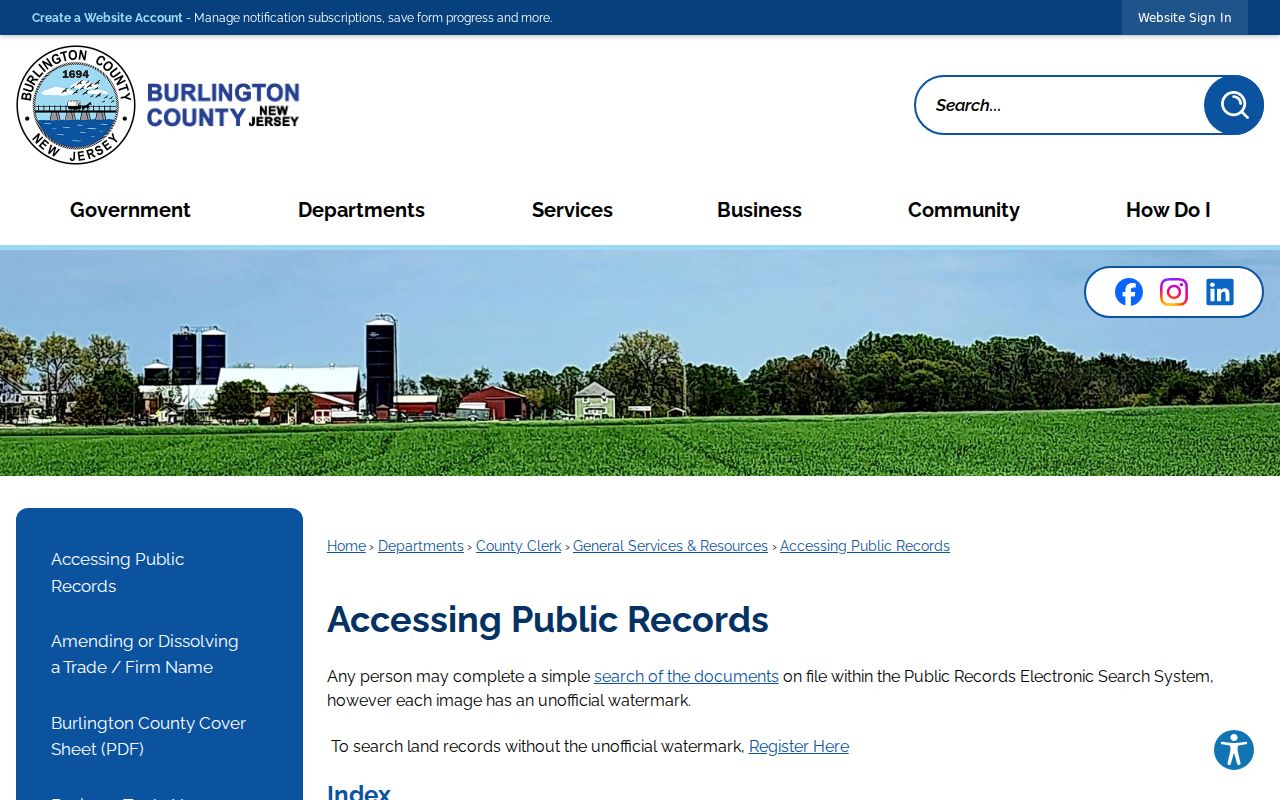
That access route is useful for recorded instruments, while the township map and assessor answer the parcel-navigation portion of the search.
Moorestown Office Contacts
Municipal contact information is a routing tool, not a resident list. The township staff directory can be searched by category, first name, and last name. It brings together the offices most likely to direct a defined records request, including the Township Clerk, Tax Assessor, Tax Billing and Collections, planning and zoning, construction, police, court, library, public works, and vital statistics. A current municipal page should take priority when an older printed source has a conflicting number or office location.
The municipal OPRA route is for an identifiable record held by the township. The research did not locate a complete Moorestown archive portal, broad permit search, cemetery index, animal-license search, or alarm-register search. When a portal is not documented, ask the responsible custodian about a specific record, date range, and address or report number. A broad name-only request is less likely to identify a record the office can locate.
The Moorestown staff directory is the current office-contact source used here.
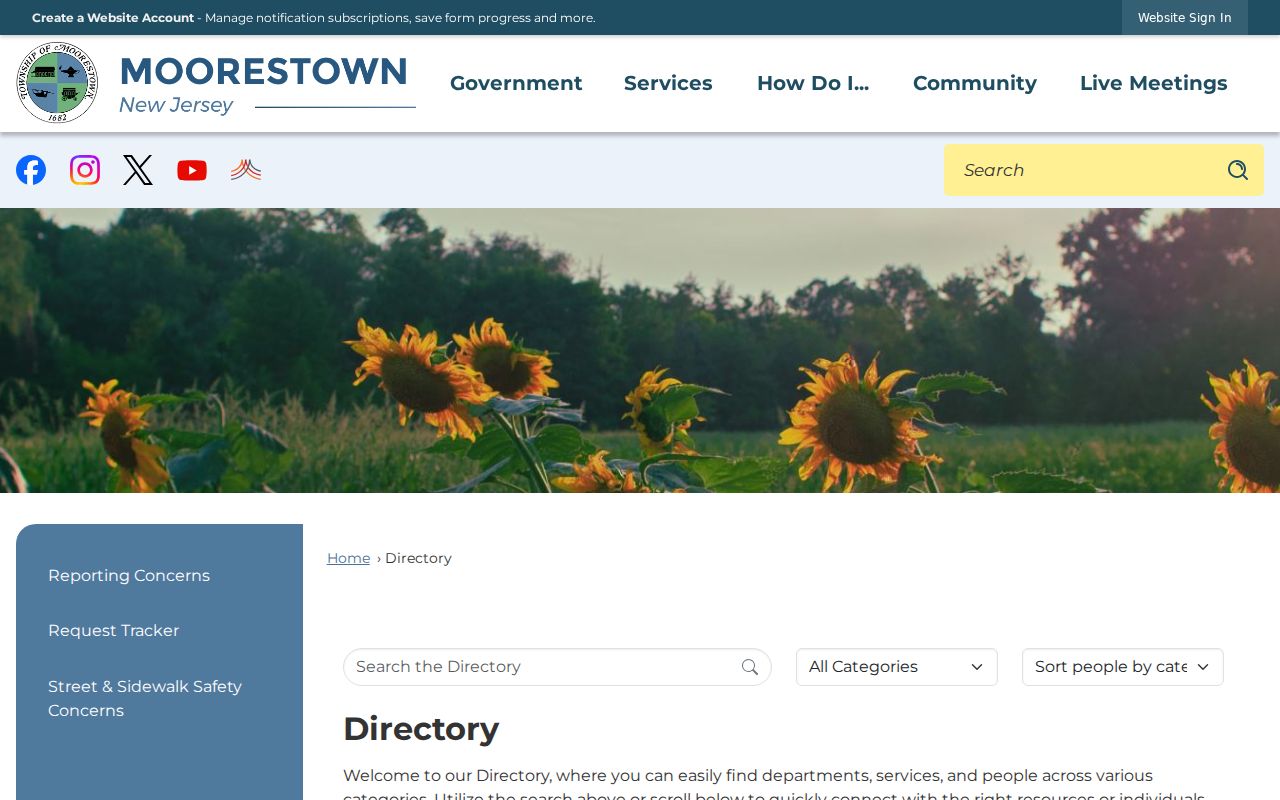
It can help direct a request to the right office, but it does not establish that a listed employee lives in Moorestown.
Current Moorestown Resident Sources
Current Moorestown resident sources are purpose-built records, not parallel copies of the same list. A property file may tie a party to a parcel or recorded instrument. The individual voter-status tool has a narrower identity check. Court systems index cases, not biographies. Public boards and staff pages document civic roles. Treat each source as evidence of exactly what it records, then look for a second source if identity or timing is important.
| Moorestown source | What it can confirm | Custodian | Access route |
|---|---|---|---|
| Tax, map, and parcel route | Address, parcel navigation, and tax-account search keys | Moorestown assessor and tax offices | Municipal pages, map viewer, or office |
| Recorded land index | Parties and recorded-instrument trail | Burlington County Clerk | PRESS, public computers, copies |
| Voter status or list request | Individual registration status or permitted election material | State portal and county elections offices | Name and date-of-birth check or scoped request |
| Municipal staff and boards | Public office or civic-body connection | Moorestown Township | Directory, agendas, minutes, and contact routes |
| Historical collections | Dated household, organization, or address clues | Library, Historical Society, and archives | Digital file, research library, or request |
When the question has narrowed to one name, the Moorestown resident lookup workflow keeps court, vital, voter, parcel, and public-affiliation checks in their proper lanes.
Moorestown Voter Record Limits
The New Jersey registration check is an individual status tool. It uses first name, optional middle initial, last name, and date of birth. It is not a bulk directory. A county request can be scoped by municipality, ward, district, delivery choice, cost authorization, and intended use. The state voter system contains more fields than may be released in a public list. Signatures, protected addresses, driver-license or Social Security data, full dates of birth, phone and email information, and Daniel’s Law material have restrictions.
| Observed field | How it is used |
|---|---|
| First and last name | Required identity fields in the state status check. |
| Middle initial | Optional detail that can help distinguish same-name entries. |
| Date of birth | Required for the individual status check, not a public bulk-list field. |
| Municipality, ward, district | Fields for a properly scoped county election request. |
| Delivery, cost, intended use | Request-form fields used for fulfillment and statutory review. |
Moorestown’s county election offices are at 301 Harper Drive, but the voter OPRA form retained a Mount Holly processing address in the research. Confirm delivery routing before mailing a request.
Moorestown Court and Vital Checks
A court name hit is a starting point, not a complete identity finding. New Jersey Courts separates municipal, civil, criminal, judgment, and other case paths. Results can show party, docket, venue, filing, status, or disposition metadata, while actual documents may need a separate copy request. Match a party-name result against the venue, docket, date, case category, and disposition before connecting it to a Moorestown resident. The municipal court’s current page and a statewide session PDF identify different session locations, so confirm the court location before visiting.
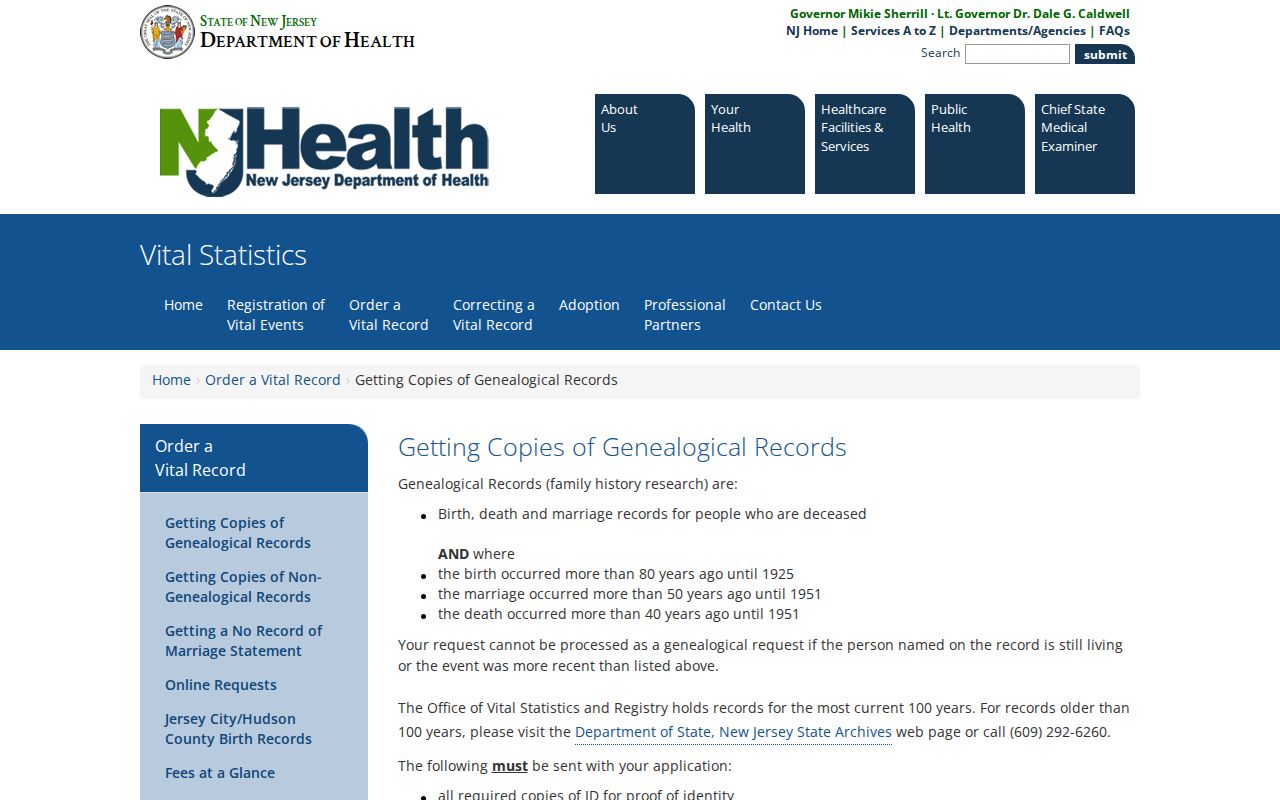
Vital records are more restricted. New Jersey treats births older than 80 years, marriages older than 50 years, and deaths older than 40 years through its genealogical route. Newer certified copies require the needed event details, identification, and eligible relationship or authority. Moorestown’s municipal registrar can issue eligible local events, while the state holds statewide material and the State Archives is the historic fallback. Burlington County Clerk materials specifically say the Clerk does not maintain vital records.
New Jersey Vital Records describes the current record system.
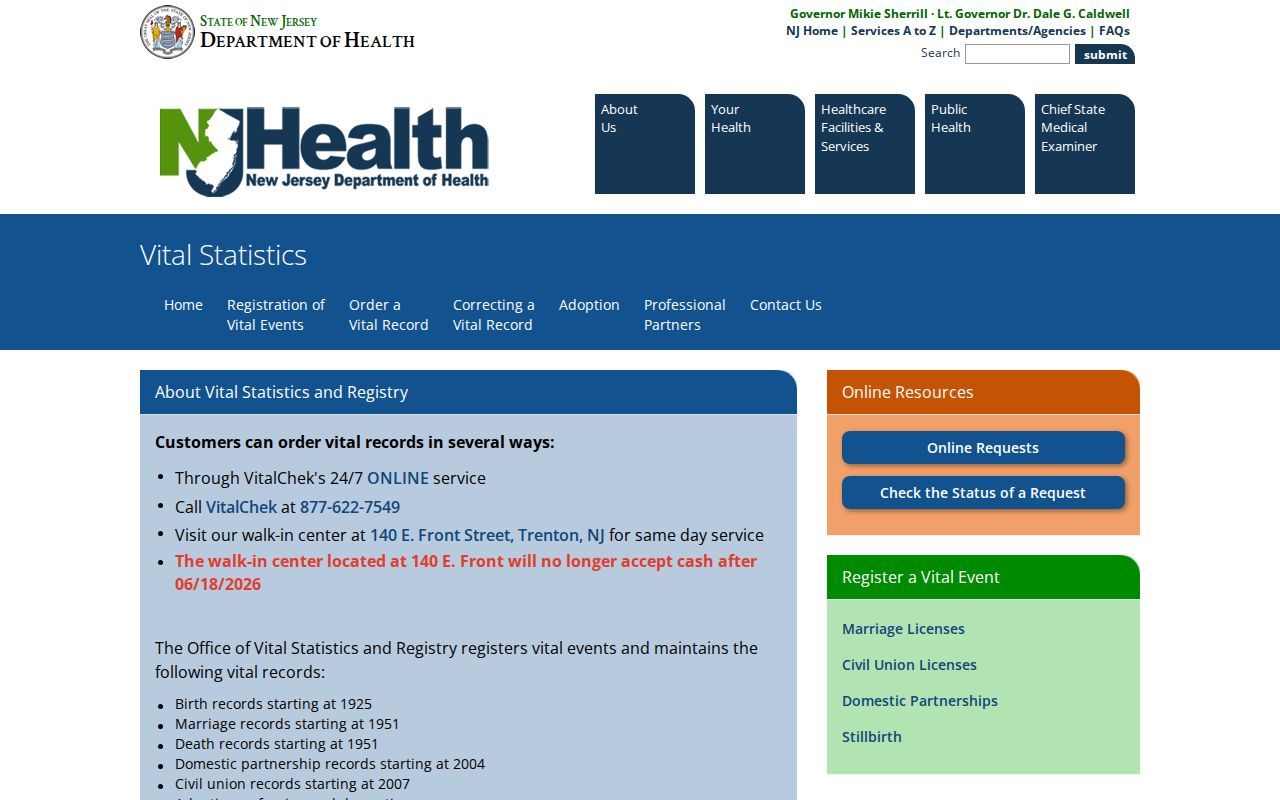
The agency’s access rules make a vital request a qualifying event search, not a general way to identify current Moorestown residents.
Moorestown OPRA Request Path
New Jersey Open Public Records Act requests go to the custodian that keeps an identifiable government record. The usual response standard is seven business days when a record is available, subject to special timing and review rules. OPRA does not require an office to create a new report or compile a directory that it does not maintain. Electronic delivery may be free; the documented ordinary copy fees are five cents per letter page and seven cents per legal page, with special-service or actual-cost situations possible.
Use a clear description, relevant date range, municipality, and address, block/lot, or report number when available. Keep the request, response, date, fee, and stated exemption. The Government Records Council provides guidance on timing, fees, and appeal choices. If an office has a different record custodian, move the request to that office rather than asking the first office to search every system.
New Jersey Government Records Council FAQs provide the statewide request guidance.
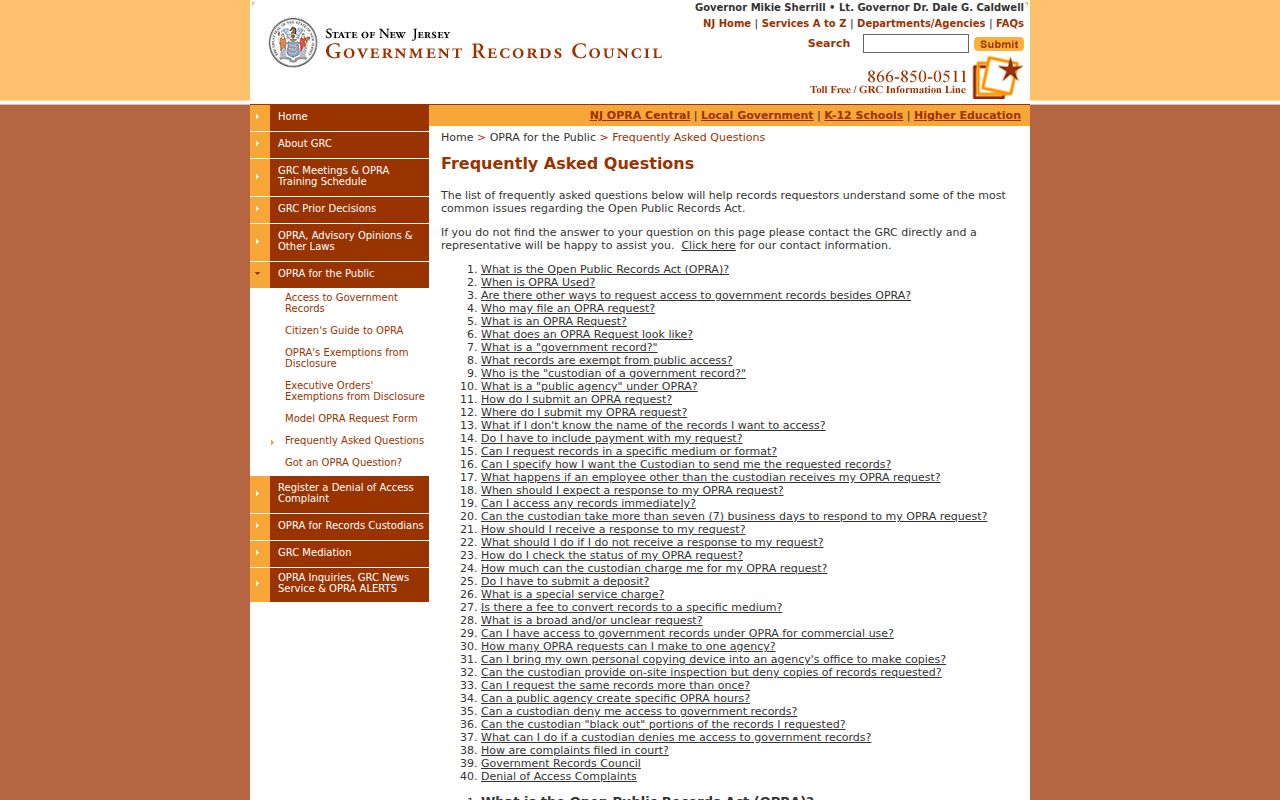
The form of the request matters because the correct response may be an existing record, a lawful redaction, a clarification request, or a notice that the office does not hold it.
Moorestown Statewide Record Tools
Some questions lead beyond the township and county. New Jersey’s Business Records Service can check a registered entity, trade name, mark, status, or filing. Professional license verification checks a defined credential using fields such as profession, license type, name, number, and city. Both are records of a public affiliation or credential. They do not prove that a person currently lives at a Moorestown address. Search exact spelling and preserve the entity ID, status date, or license context returned by the official source.
New Jersey’s unclaimed-property search is another limited statewide name route. It permits searches by name, former or maiden name, business, or nonprofit, then requires the claimant to establish a legal right to the property. It is free to search. An unsolicited demand for a payment or sensitive credentials should be treated as a warning sign and verified through the official state channel.
New Jersey’s business-name search is the official entity lookup used for this type of question.
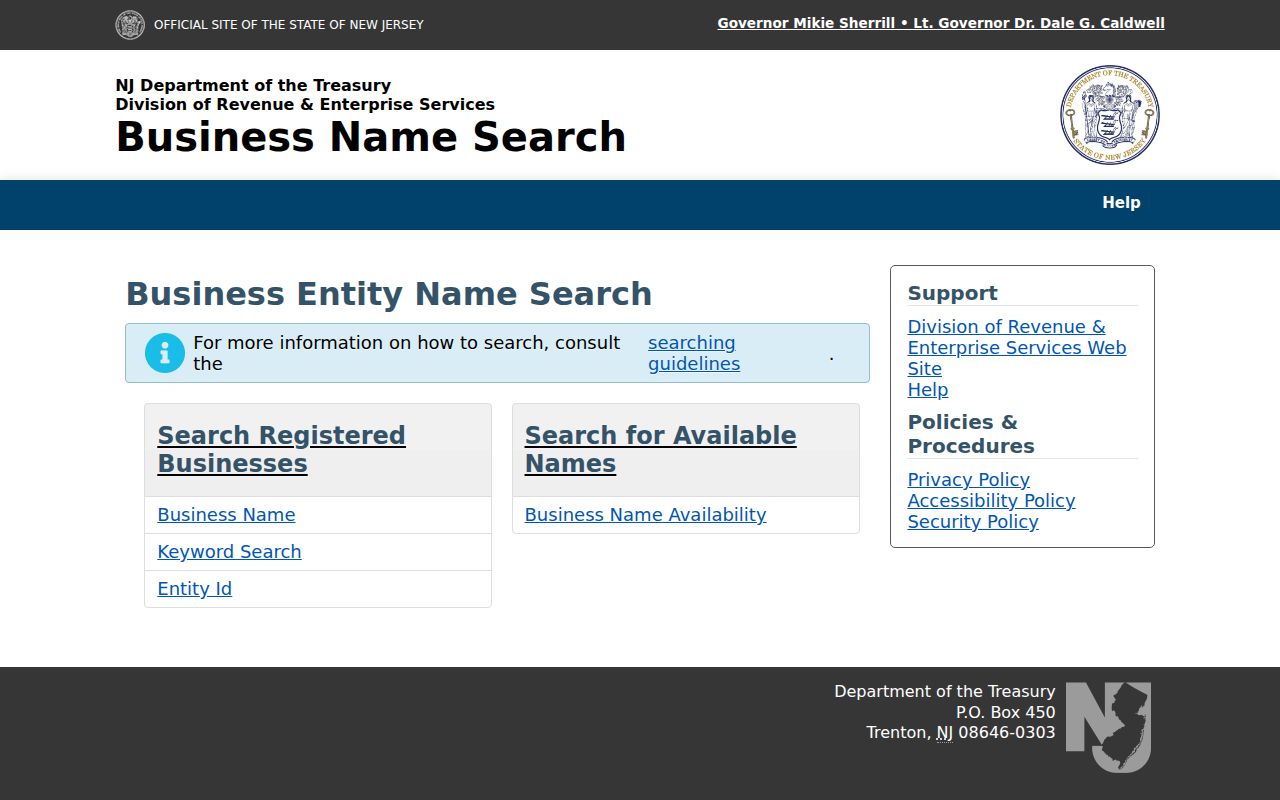
A business result should be read as an organization record, then compared with property or local-history material only when the question concerns that entity or building.
New Jersey Unclaimed Property is the state’s free claim-search route.
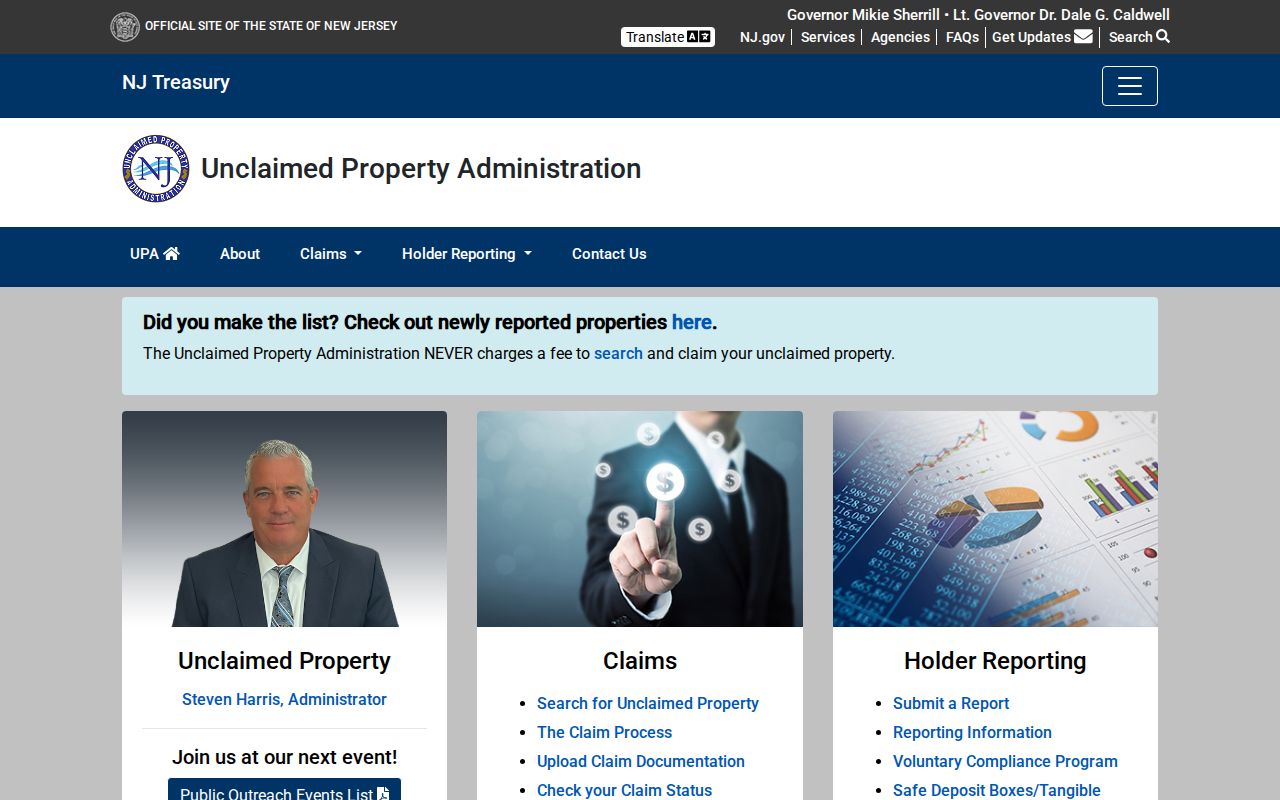
That search can help a claimant investigate a state-held asset, but it does not create a Moorestown residence record.
Historical Moorestown Directories
Historical directories give a dated view of a household or organization, not a complete population count. The documented Burlington County run that includes Moorestown covers 1883–84, 1886, 1887, 1889–90, 1893–94, 1895–96, 1897–98, 1899–1900, 1901–02, 1903–04, 1905–06, 1910–11, and 1929. The Historical Society of Moorestown also reports city directories, maps, yearbooks, church and cemetery material, family files, home files, photographs, and local organizational material. Its research library is non-lending.
The 1987–88 Moorestown Town Phone Book is the identified digital local artifact. Directory entries can carry a name, address, telephone, household notation, or organization detail, but a reader must inspect the exact page and year. The full collection treatment is on the Moorestown city directories page; a present-day street or parcel question belongs with current records rather than an old book.
New Jersey State Archives genealogical collections supply the older statewide and county research route.
Archives, dated directories, and the local research library can fill different parts of an older Moorestown household trail.
Moorestown’s Older Place Names
The 1987–88 phone book preserves useful historical names: Chestertown, Rodmantown, Moore’s Town, and Moorefield. It also notes the Post Office name Moorestown in 1802, a first Friends meeting house in 1700, and railroad arrival in 1867. Those details are search pivots, not alternate current municipalities. Use them beside Moorestown in directory, newspaper, map-caption, deed, and Historical Society searches, then retain the form that the original source actually uses.
Moorestown’s Master Plan describes a T-shaped historic district around Main Street, Kings Highway, Mill Street, and Chester Avenue, with about 350 contributing structures in a 1990 survey. The 1923 Sanborn map and local newspapers can add building and neighborhood context. Neither one proves a current owner or occupant. A property conclusion needs the appropriate contemporary parcel or land record as well.
Note: Older place names can explain a missed keyword search, but they should be logged as historical wording rather than substituted for a verified modern address.
Moorestown Record Search Notes
Good Moorestown residents research leaves an audit trail. Record the custodian, URL, search date, field used, exact spelling, date range, returned wording, and whether the result was an index entry, image, copy, or no-result response. A PRESS wildcard, an omitted middle initial, a married or former name, and an older place name can all change what an index returns. Keep the original spelling beside any normalized version rather than silently replacing it.
For an address, log the original address line, street suffix and directional, unit if one appears, ZIP+4, map sheet, block, lot, qualifier, and legal-description wording. For a name, distinguish a party to a deed, a voter-status result, a court party, a public board member, and a historical directory entry. A source inventory is not evidence that a person was found. A blank result is not proof that a person or record never existed.
Moorestown Protected Record Limits
Daniel’s Law and New Jersey’s Address Confidentiality Program can limit what is visible in an otherwise public search. The Office of Information Privacy reported more than 10,000 approved covered individuals in April 2025. The Address Confidentiality Program gives qualifying survivors a substitute address for program purposes. A missing address may reflect lawful protection or redaction, not a missing person or a defective record.
Stop the research route if it begins to assemble a protected address, a substitute-address identity, or a pattern of repeated unwanted contact. Preserve the lawful custodian route instead. For a safety concern, contact the appropriate police or court channel rather than using record searches as a substitute for assistance.